

Every rack in a modern data center is instrumented: temperature, humidity, airflow, and, as direct liquid cooling adoption grows, coolant leak detection. Each sensor is a small electronic package, and each must keep working for the life of the facility, in an environment that cycles in temperature and, in a liquid-cooled rack, sits close to a potential moisture source.
Why Hermetic Sealing Matters
For a poorly sealed electronic package, moisture can penetrate the enclosure within hours to days, degrading performance or causing outright failure. The mechanism is a pressure difference between the sealed cavity and the outside environment, which lets protective gas leak out and pulls external moisture, harmful gases, ions, and particles in through any imperfect seal. Temperature swings across a duty cycle are one of the things that open that pressure difference, and a sensor package sitting near cooling hardware sees them constantly. Meeting that standard starts with the seal itself: a weld with no gap, no porosity, and no path for gas or moisture to cross.
Where Our Capability Fits
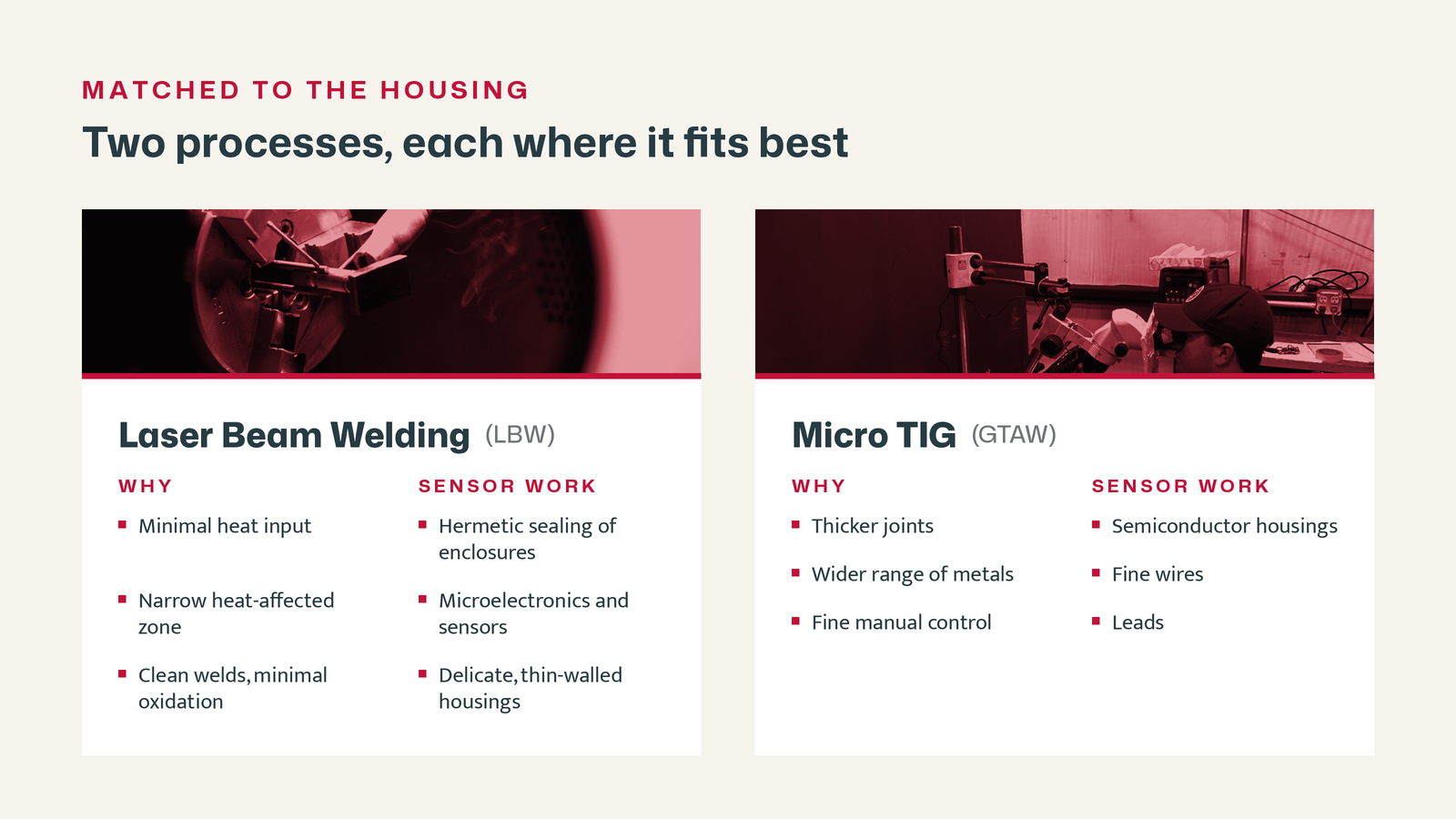
Laser Beam Welding is our process of choice for hermetic sealing of enclosures and microelectronics and sensors in general: minimal heat input, a narrow heat-affected zone, and clean, contaminant-free welds on delicate, thin-walled housings where distortion isn't an option. That narrow heat-affected zone matters most when a connector or lead has to be welded close to live electrical components inside the housing: the localized heat of a laser weld keeps those components clear of the kind of heat-related damage a higher-heat traditional welding process could cause.
Micro TIG (GTAW) covers the sensor and avionics side of the same work: semiconductor housing, fine wires and leads, and connectors, where a thicker joint, a wider range of metals, or hand-fit flexibility matters more than the absolute minimum heat input. Between the two processes, we can match the joining method to what the housing and the application need, rather than forcing one process to do both jobs.
The Quality System Behind the Weld
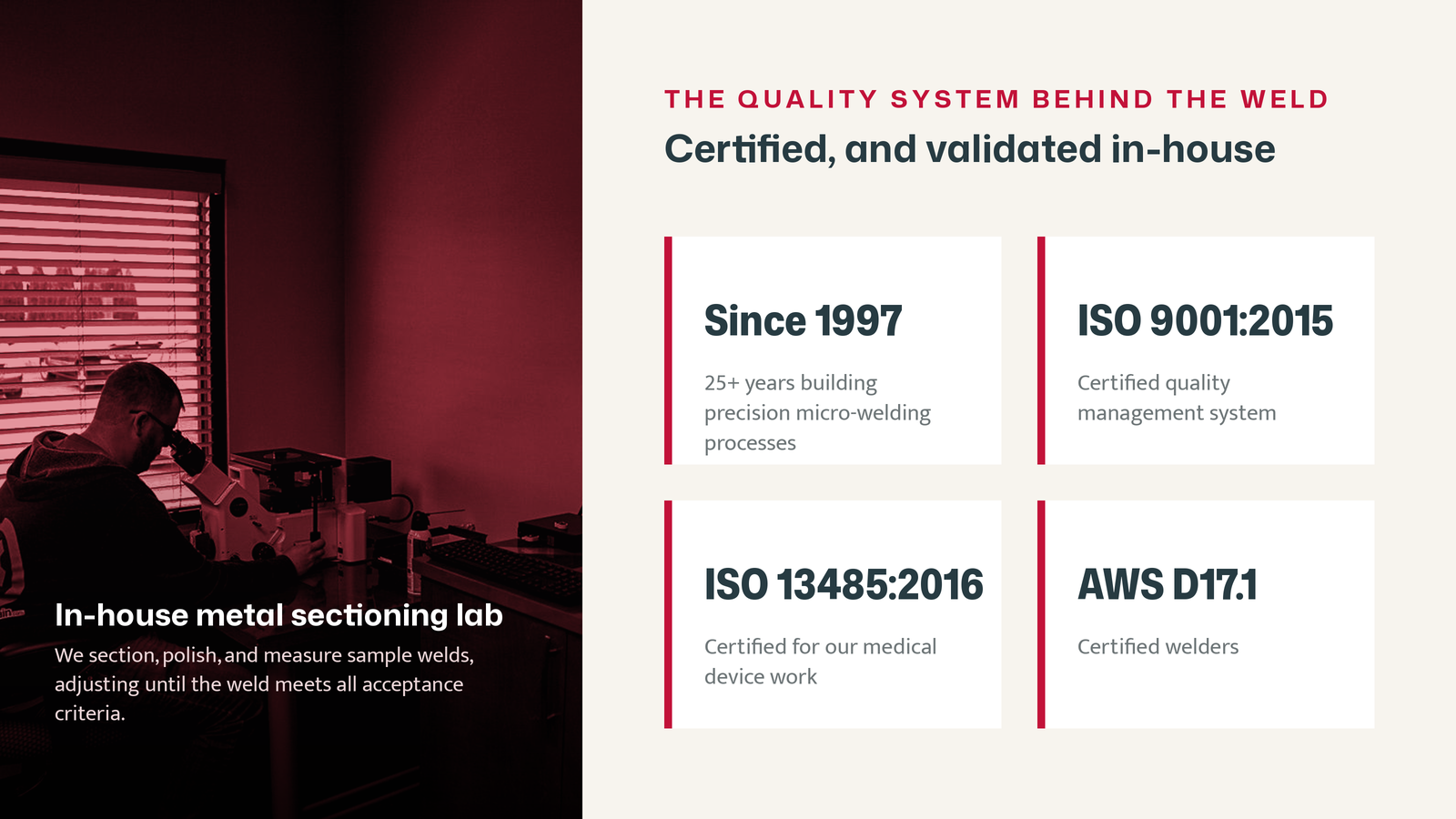
We have built precision micro-welding processes for over 25 years, since 1997, and every weld runs through a quality management system certified to ISO 9001:2015 and, for our medical device work, ISO 13485:2016, with AWS D17.1-certified welders. Our metal sectioning lab can verify every joint in-house, confirming penetration and porosity before a part ships, which is the same standard we hold for a cooling loop or a sensor housing.
We do all of this at our facility, on components sized to fit our precision welding equipment. If you are designing sensors or monitoring hardware for a data center environment and need a hermetically sealed enclosure, semiconductor housing, or fine-wire and connector work, send us a print and let's talk about what your application needs.