

Fusion welding is one of the most widely used methods for joining metals, especially in industries where strength, precision, and reliability are critical. From aerospace components to medical devices, fusion welding plays a key role in producing clean, durable joints without the need for mechanical fasteners.
But what exactly is fusion welding, and when is it the right choice?
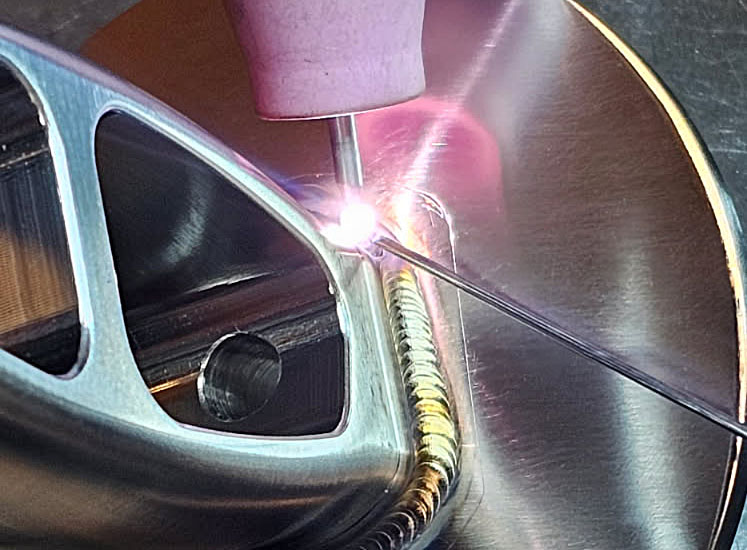
What is Fusion Welding?
Fusion welding is a process that joins materials by melting the base metals together, often with or without the addition of filler material. Unlike solid-state welding methods, fusion welding relies on heat to create a molten weld pool that solidifies into a strong, permanent bond.
Common fusion welding processes include:
- TIG (GTAW) welding
- Laser beam welding (LBW)
- Electron beam welding (EBW)
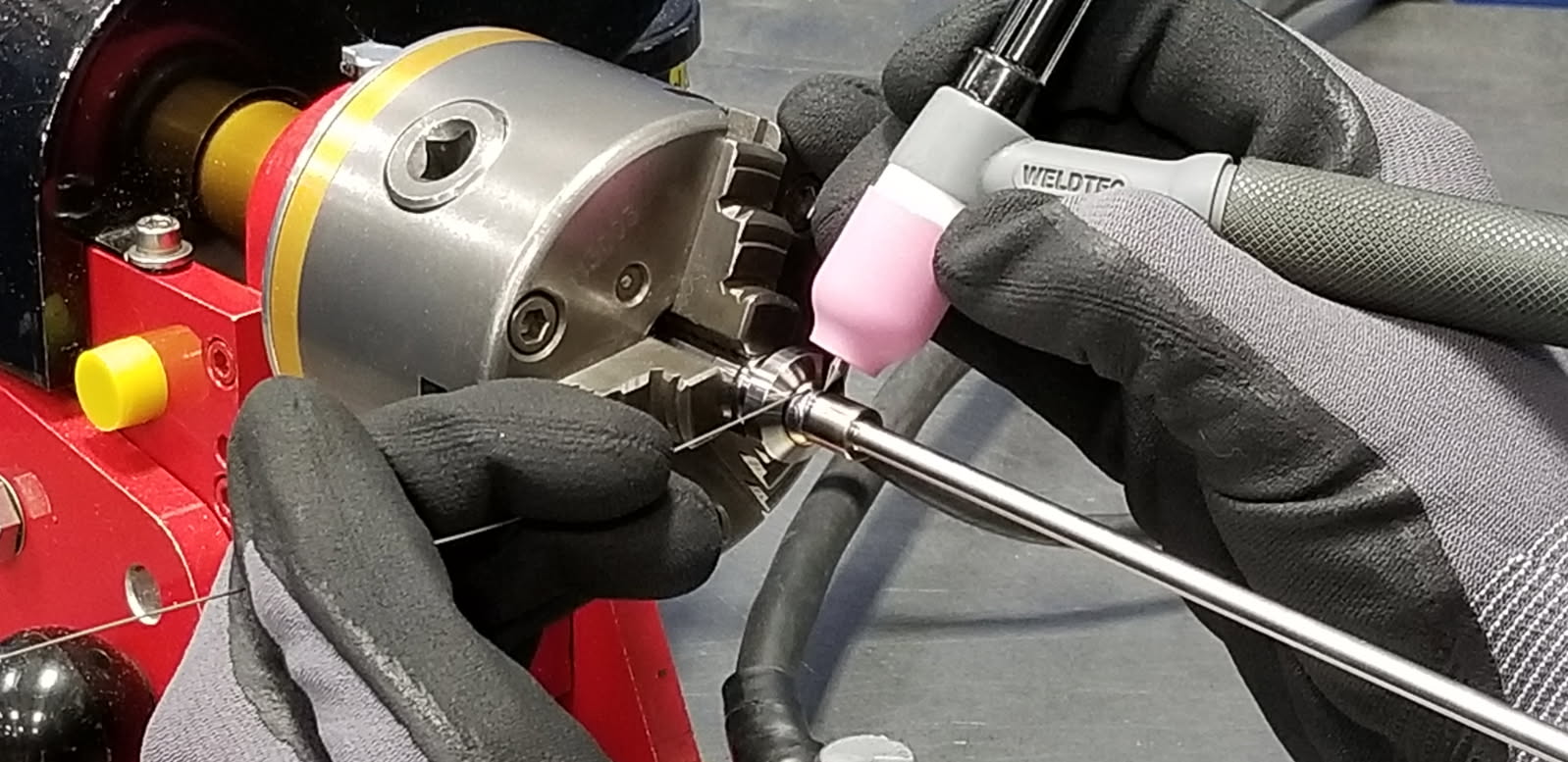
Each method uses a different heat source, but all fall under the same principle: controlled melting and fusion of materials.
How Fusion Welding Works
Fusion welding follows a precise sequence:
- Heat Application: A concentrated heat source (arc, laser, or electron beam) raises the material to its melting point.
- Weld Pool Formation: The base materials liquefy at the joint, forming a small, controlled molten pool.
- Filler Material (Optional): In some applications, filler metal is added to strengthen the joint or improve fit-up.
- Cooling and Solidification: The molten pool cools and solidifies, creating a metallurgical bond between the materials.
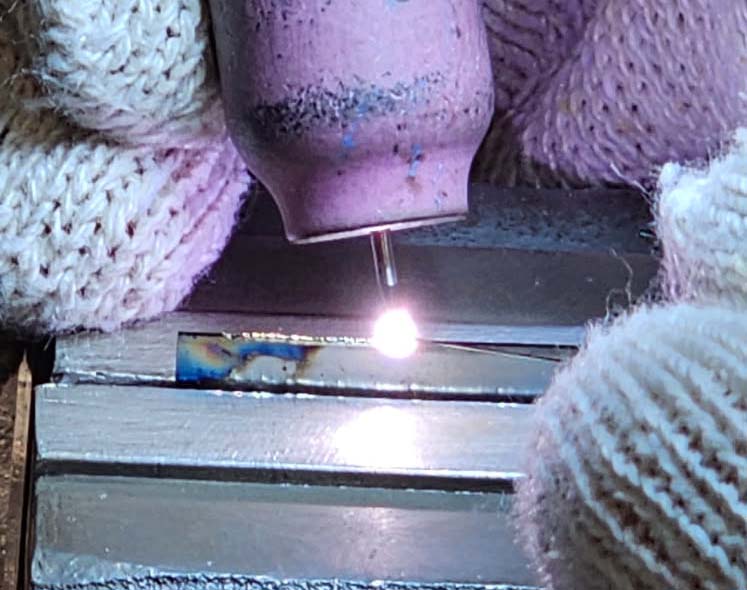
The key to success lies in controlling heat input, timing, and material behavior, especially in high-precision applications.
When to use Fusion Welding
Fusion welding is ideal when applications require:
- High-strength joints
- Precision at small scales
- Clean, aesthetic welds
- Minimal mechanical distortion
- Compatibility with thin or delicate materials
It is commonly used in industries such as:
- Medical device manufacturing
- Aerospace and aviation
- Automotive and industrial components
- Firearm component repair and manufacturing
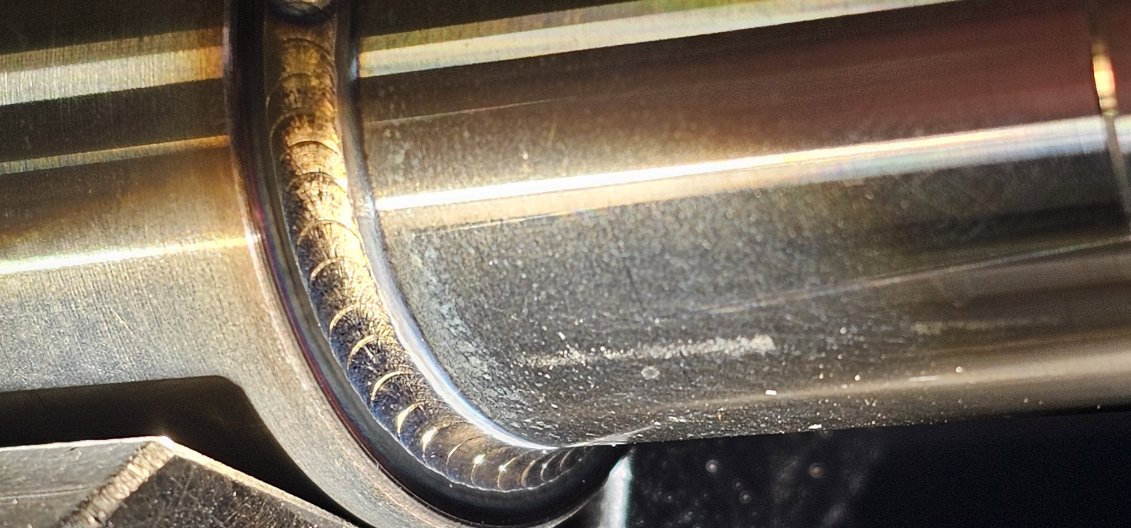
Fusion Welding vs. Other Welding Methods
Unlike solid-state processes, fusion welding involves melting the material. This allows for:
- Greater flexibility in joint design
- Strong metallurgical bonding
- The ability to weld complex geometries
However, it also requires careful control to avoid:
- Excessive heat input
- Distortion or warping
- Porosity or contamination
How Microtech Applies Fusion Welding
At Microtech, fusion welding processes like TIG (GTAW) and laser beam welding are used to produce high-quality, repeatable results for critical applications.
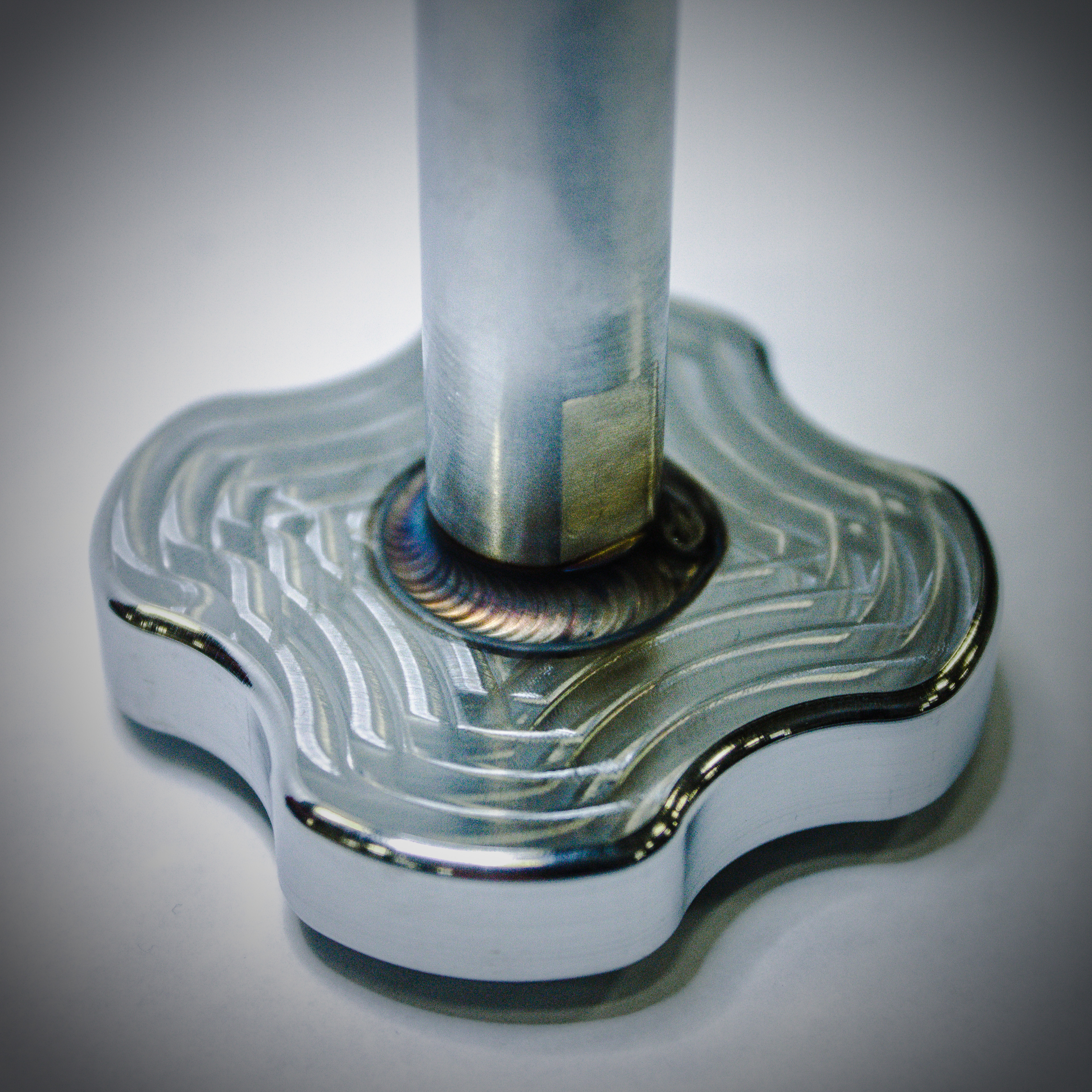
Whether working with stainless steel, titanium, or other specialty alloys, the focus remains on:
- Tight process control
- Minimal heat-affected zones
- Consistent, precision welds
By combining advanced equipment with experienced welders, we ensure each weld meets exacting standards for performance and reliability.
Have a complex weld? We've probably done it.