

An orthopedic implant doesn't get a second chance. A femoral stem, spinal cage, or trauma plate has to perform inside the human body for years, sometimes decades, under constant mechanical load, with zero tolerance for failure. Every weld on that component carries the same expectation.
That's what makes orthopedic implant welding fundamentally different from general metal fabrication. The materials are reactive, the geometries are unforgiving, and the margin for error is essentially zero. Here are the challenges that come with welding orthopedic implants, and what it takes to weld them.
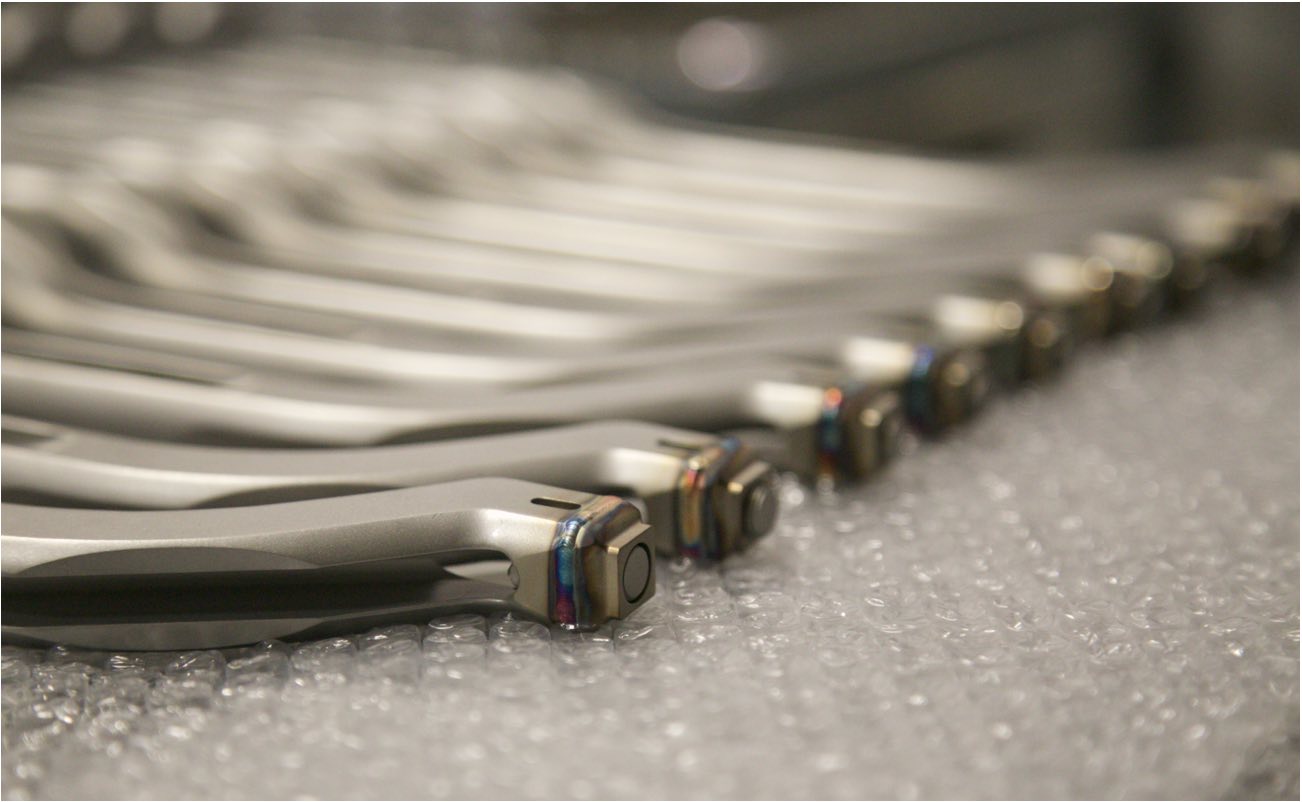
Why Orthopedic Implants Demand a Different Approach to Welding
Orthopedic components are implantable-grade medical devices first and welded parts second.
Every joint needs to hold up to cyclic loading from walking, gripping, or spinal movement, resist corrosion in a biological environment, and remain biocompatible for the life of the device.
A weld defect that would be cosmetic on an industrial part can become a fatigue crack origin point in an implant. That reality shapes every decision in medical device welding, from material selection to process control.
Material Sensitivity: Titanium, Cobalt-Chrome, and Stainless Alloys
Most orthopedic implants are made from titanium, cobalt-chromium alloys, or low-carbon, vacuum-melted stainless steel. Each brings its own welding challenge:
- Titanium is highly reactive to oxygen and nitrogen at welding temperatures. Without proper inert gas shielding, it readily oxidizes, forming a brittle surface layer that compromises strength and corrosion resistance.
- Cobalt-chrome alloys, prized for wear resistance in articulating joints, are harder to fuse cleanly and more prone to cracking under poor heat control.
None of these materials forgive shortcuts. Laser welding medical devices made from these alloys typically requires inert gas shielding or vacuum-chamber environments to keep the weld zone free of contamination.
Controlling Heat-Affected Zone (HAZ) and Microstructure
Excess heat input is one of the most common causes of weld failure in implants. A large heat-affected zone causes grain growth, distortion, and a weaker, less corrosion-resistant microstructure right at the joint, exactly where the part needs to be strongest.
This is where the welding process itself matters as much as the material. Conventional arc welding methods put more heat into the part than implant-grade alloys can tolerate. Medical device laser welding, by contrast, concentrates energy into a tightly controlled spot, minimizing HAZ and grain growth while still achieving full penetration. For thin-walled, thermally sensitive geometries like spinal cages or trauma plates, that level of control isn't optional.
Precision Geometry and Access Constraints
Orthopedic components rarely offer a straightforward, flat joint. Femoral stems taper. Spinal cages have intricate lattice structures. Trauma plates and screws combine thin walls with high aspect ratios. Surgical instruments built alongside them, forceps, reamers, and guide pins, add even tighter access constraints.
Reaching these joints reliably calls for processes built for confined geometry: laser beam welding (LBW) for ultra-precise welds with minimal HAZ, and micro-TIG (GTAW) for thin materials and dissimilar metal joints. Weld bead sizes often need to be controlled below 0.005", with CNC-driven sequencing and high-resolution vision systems guiding joint tracking, since manual technique alone can't hold that tolerance consistently across a production run.
Avoiding Contamination, Porosity, and Inclusions
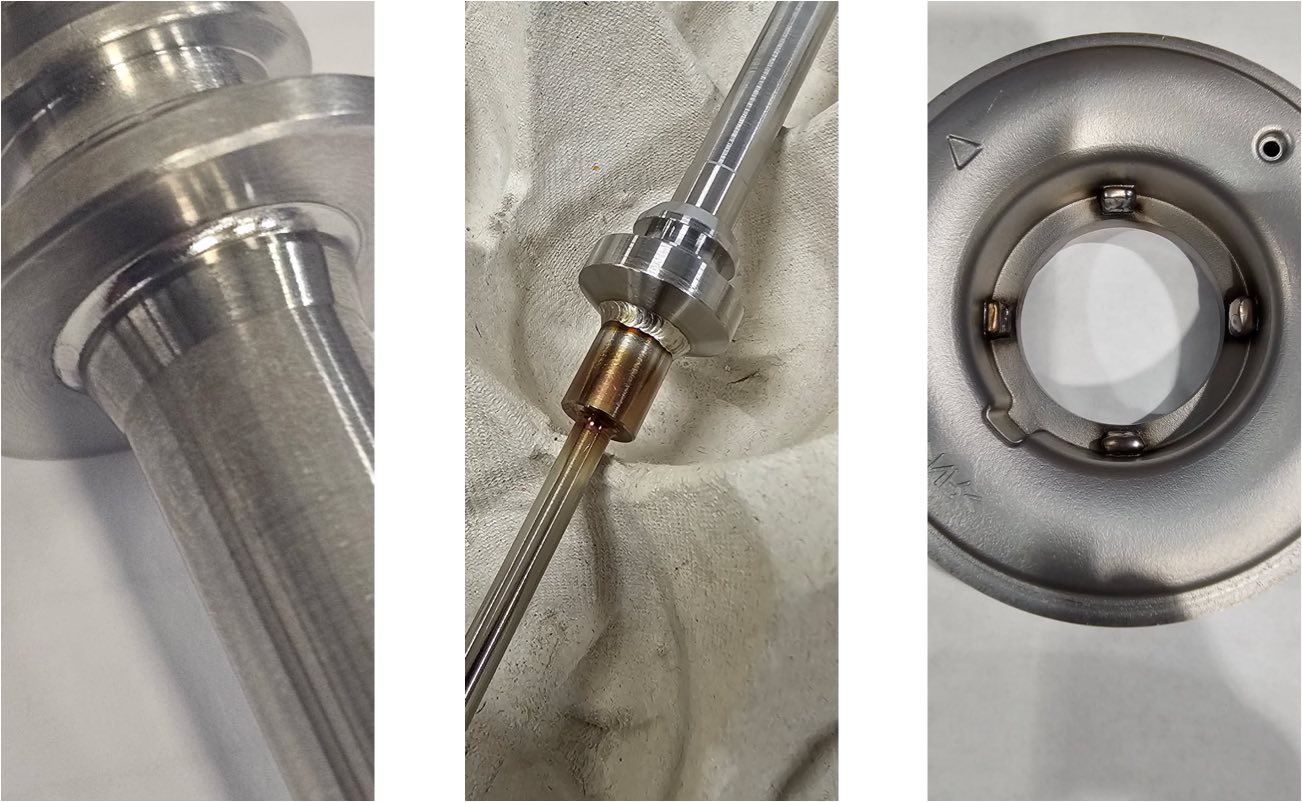
Implantable devices can't carry porosity, inclusions, or surface contamination into the body. Even microscopic defects can become stress concentrators or compromise biocompatibility. Precision welding for medical devices requires a controlled environment, clean fixturing, contamination-free handling, and shielding gas purity to keep the weld pool free of anything that doesn't belong there.
Fatigue Performance and Long-Term Reliability
An orthopedic implant doesn't fail under one big load; it fails after millions of small ones. Hip and knee components flex with every step. Spinal hardware bears the load with every movement. A weld with even minor porosity or an oversized HAZ becomes the likely starting point for a fatigue crack long before the surrounding base material would fail. Achieving full penetration and a clean, defect-free fusion zone isn't about appearance; it's about giving the implant the fatigue life it's designed for.
Regulatory Compliance and Traceability
Beyond metallurgy, orthopedic implant welding operates inside a strict regulatory framework. Class II and III implantable devices require documented process validation, qualified welding procedures and operators, and full material traceability, typically governed under an ISO 13485 quality management system. Every weld parameter, every lot of titanium or cobalt-chrome, and every operator certification needs a paper trail. This isn't a separate concern from the welding itself; it's what makes consistent, repeatable biomedical device welding possible at production scale.
How Microtech Approaches Orthopedic Implant Welding
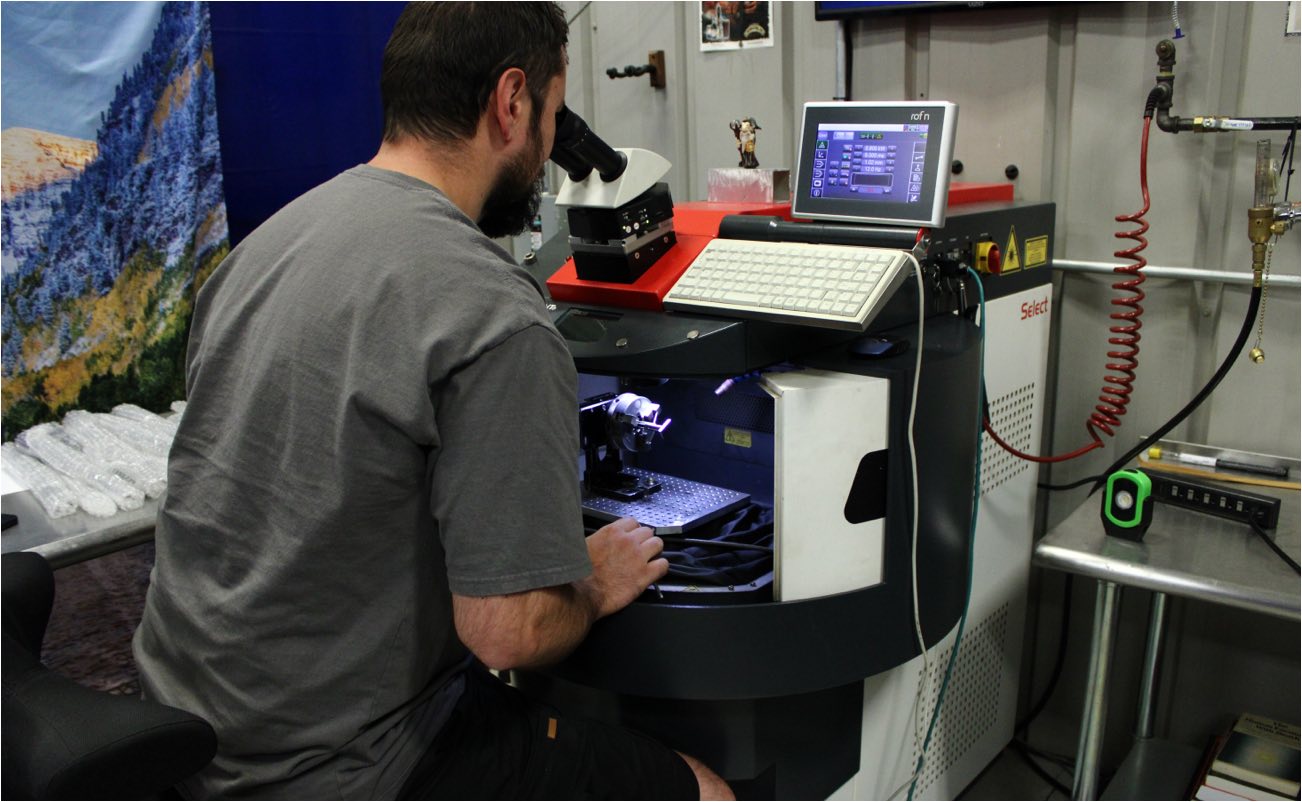
Microtech Welding Corp. has spent more than 25 years focused specifically on precision micro-welding, with a combined team experience of over 100 years across the floor. Our work on orthopedic components, including femoral stems, spinal cages, and trauma plates, runs through the same two processes built for this level of demand: Laser Beam Welding (LBW) and Micro-TIG (GTAW), supported by vacuum and inert gas chambers for oxide-sensitive alloys.
We routinely work with medical-grade materials compliant with ASTM F136, F138, and ISO 5832 standards, and our facility's quality management system is ISO 13485-certified, with full process validation, operator qualification, and traceability built in. Whether the job calls for joining titanium components, working with additively manufactured implant geometries, or holding weld beads below 0.005" on a thin-walled spinal component, the goal is the same: a joint that performs exactly as the implant's design intended, every time.
Have a complex orthopedic implant weld? We've probably done it.